FR
EN
Confirm order
LOG IN
Forgot your password ?
Identification
You can also use the following identification providers
New user? Create an account
Demo
Subscribe
Briefs
News
All articles
Sector
3 questions to...
Authorities
Congresses
Jurisprudence
Publications
Agenda
Regulation
All articles
European Commission
SCCS
ECHA
France
IFRA
International
Focus
The checklists
Trends
All articles
Ecoresponsibility
Market
Tech / Digital
Consumers
Experts
The checklists
Ingredients
All articles
News
Ingredients search
Ingredients by categories
Products
All articles
Products news
Launches trends
Recalls of products
Pack
All articles
News
Ecoresponsability
Innovation
Basics
All articles
Dossiers
Advising consumers
The language of labels
Cosmetics glossary
E‑Library
Confirm order
Articles
…
Ingredients
All articles
News
Ingredients
:
News
Phytonadione epoxide: preliminary Opinion of the SCCS
In June 2026, the SCCS (Scientific Committee on Consumer Safety) accepted the European Commission’s mandate to assess the safety of phytonadione epoxide. The Scientific Committee on Consumer Safety has just published its preliminary opinion.
CLH classifications: Intention for Terpineol, proposal for Capric acid
On November 4, 2026, ECHA (the European Chemicals Agency) announced that terpineol was the subject of a harmonized classification and labeling (CLH) intention and that capric acid was the subject of a classification proposal.
Reminder - IFRA 52: entry into force of the Specification and Restriction Standards
On 12 December 2025, the IFRA (International Fragrance Association) published the 52nd amendment to its Standards. Eleven months later, on 12 November 2026, the new Standards on specifications and restrictions came into force for new creations.
California targets three new PFAS under Proposition 65
On 30 October 2026, the California Office of Environmental Health Hazard Assessment (OEHHA) published three notices of intent to list certain chemicals – PFAS – under Proposition 65. The consultation period is open until 30 November.
Alternatives to microbeads: an analysis by the RIVM
They have been banned since 2023. But in products where they were useful, they had to be replaced with something else. Are the alternatives to plastic microbeads safe for human health and the environment? That is the question the RIVM sought to answer in this analysis.
Tuesday, January 31, 2012
When "Allergen-free" is essential for essential oils
“Allergen-free.” The mention is still frequently found on cosmetic labels, a sign of strong consumer demand and the willingness of manufacturers to tr...
Friday, January 27, 2012
SCCS : Hearing on Fragrance Allergens
On 5 March 2012, the Scientific Committee on Consumer Safety (SCCS) advising the European Commission, will be organizing a scientific hearing on the...
Friday, January 6, 2012
Are nano-ingredients needed in sunscreens?
The question is asked by Australian M.Ds and experts. The Friends of the Earth association passes on the information now. Its conclusion: nano-particl...
Thursday, December 29, 2011
SCCS : 13th Plenary meeting
The SCCS 13th plenary meeting was held on December 13 and 14, 2011. On the agenda, opinions on allergens and nitrosamines in cosmetics; questions on H...
Thursday, December 29, 2011
Allergens in cosmetics: to an up-date of the list of 26
The list of 26 substances that shall be listed on a label, released in 1999, is, since a long time, the subject of a great deal of criticism: often co...
Monday, December 5, 2011
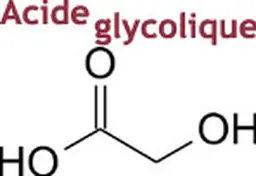
Glycolic Acid
Anti-wrinkles, anti-spots, anti-acne, anti-dull complexion … Glycolic Acid comes with attractive and promising claims. It is an element found both in ...
Saturday, November 26, 2011
Endocrine disruptors: a first sum up of the current scientific knowledge
The 9th Congrès Parfums et Cosmétiques of the Cosmetic Valley (Conferences on Perfumes and Cosmetics), held in Chartres on 23 and 24 November 2011, is...
Wednesday, November 23, 2011
Palm oil: an answer from L'Occitane en Provence
On November 22, 2011, the World Wildlife Fund has released a worrying report on the sustainable palm oil. It adds a classification of more than 130 co...
Tuesday, November 22, 2011
Formaldehyde, in a more severe carcinogenic category?
Formaldehyde is used as a biocide, a preservative and a fixing agent, in many consumer goods and construction products … and also, on a small scale, i...
Tuesday, November 22, 2011
Palm oil: not yet sustainable enough, says WWF
The warning comes from Kota Kinabalu, Malaysia, released by the World Wildlife Fund (WWF). Companies in Europe, Australia and Japan are buying more ce...
Thursday, November 17, 2011
Aluminum in cosmetics dangerous to health (Afssaps)
The potential toxicity of aluminum in cosmetics has been a concern for several years. Often accused of promoting breast cancer or Alzheimer’s disease,...
Monday, October 31, 2011
Titanium dioxide nanoparticles: a danger for the brain
Titanium Dioxide nanoparticles are used in consumer goods such as paints, self-cleaning coatings, medicines or cosmetics. They are often present in su...
Previous page
Next page
Please enable JavaScript to continue using this application.