FR
EN
Confirm order
LOG IN
Forgot your password ?
Identification
You can also use the following identification providers
New user? Create an account
Demo
Subscribe
Briefs
News
All articles
Sector
3 questions to...
Authorities
Congresses
Jurisprudence
Publications
Agenda
Regulation
All articles
European Commission
SCCS
ECHA
France
IFRA
International
Focus
The checklists
Trends
All articles
Ecoresponsibility
Market
Tech / Digital
Consumers
Experts
The checklists
Ingredients
All articles
News
Ingredients search
Ingredients by categories
Products
All articles
Products news
Launches trends
Recalls of products
Pack
All articles
News
Ecoresponsability
Innovation
Basics
All articles
Dossiers
Advising consumers
The language of labels
Cosmetics glossary
E‑Library
Confirm order
Articles
…
Ingredients
All articles
News
Ingredients
:
News
Phytonadione epoxide: preliminary Opinion of the SCCS
In June 2026, the SCCS (Scientific Committee on Consumer Safety) accepted the European Commission’s mandate to assess the safety of phytonadione epoxide. The Scientific Committee on Consumer Safety has just published its preliminary opinion.
CLH classifications: Intention for Terpineol, proposal for Capric acid
On November 4, 2026, ECHA (the European Chemicals Agency) announced that terpineol was the subject of a harmonized classification and labeling (CLH) intention and that capric acid was the subject of a classification proposal.
Reminder - IFRA 52: entry into force of the Specification and Restriction Standards
On 12 December 2025, the IFRA (International Fragrance Association) published the 52nd amendment to its Standards. Eleven months later, on 12 November 2026, the new Standards on specifications and restrictions came into force for new creations.
California targets three new PFAS under Proposition 65
On 30 October 2026, the California Office of Environmental Health Hazard Assessment (OEHHA) published three notices of intent to list certain chemicals – PFAS – under Proposition 65. The consultation period is open until 30 November.
Alternatives to microbeads: an analysis by the RIVM
They have been banned since 2023. But in products where they were useful, they had to be replaced with something else. Are the alternatives to plastic microbeads safe for human health and the environment? That is the question the RIVM sought to answer in this analysis.
Monday, February 22, 2010
Bisphenol A: Afssa underlines problems in evaluating endocrine disruptors
The polemic and the various scientific studies published on the dangers of Bisphenol A, in particular concerning fetuses, had led Afssa (French Agency...
Sunday, February 7, 2010
Ethyl Lauroyl Arginate HCl: A New Ingredient in Our Cosmetics
Following an industry request, and after the opinion of the CSPC (European Scientific Committee on Consumer Products), Ethyl Lauroyl Arginate HCl (CAS...
Sunday, January 3, 2010
The Absolute of Lemongrass Newly Authorized in Cosmetic Perfumes
Up to the present, and since an opinion given in May 2000 by the scientific committee of European cosmetic products European, the use of the oil of ve...
Wednesday, December 30, 2009
Nanoparticles and sunscreens: the 2009-2010 Friends of the Earth-Australia guide
The Australian branch of the international NGO Friends of the Earth releases its 2009-2010 guide on nanoparticles–free sunscreens, in 77 countries. In...
Sunday, December 13, 2009
Nanoparticles: the debate goes on
While, early December 2009, the French Agency for the Sanitary Occupational and Environment Safety (Afsset), has commented the results of a study on n...
Saturday, December 5, 2009
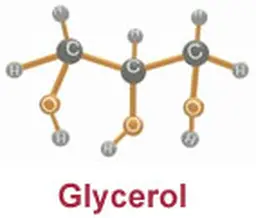
Glycerol (Glycerin)
No moisturizer without it. No cream care, no body lotion, no facial mask, soap or toothpaste without it. It is also found in shower gels, in shampoos,...
Saturday, October 3, 2009
Flower Waters
They may be the basis of a cosmetic product; further, they may be used as such to freshen or as make-up removers. Flower waters are mainly water, but ...
Sunday, April 5, 2009
Nanomaterials: back from dusk to plain light
European M.Ps. have made it mandatory: nanomaterials in our cosmetics shall be listed since 11 July 2013. This is an important step forward for regula...
Monday, March 30, 2009
Linalol (Linalool): more allergenic than previously thought?
Linalol is an aromatic substance, naturally present in the essential oils of lavender and lavandin, woodland pine or peppermint or in many vegetable e...
Monday, March 9, 2009
Oils and fats in cosmetics
Besides water, fats are the basis for numerous cosmetic products. Creams, body-lotions, serum, make-up, exfoliating agents, shower-gels and shampoos …...
Monday, March 9, 2009
Which vegetable oil for which purpose?
They are at the basis of creams, care oils, after-shampoos … and all the emulsions as a whole. They are very often ingredients of natural and organic ...
Monday, February 9, 2009
Europe Prohibits 2 New Cosmetic Ingredients
There is a new European Directive, adopted February 4, which once again modifies regulations concerning cosmetic products (currently in the course of ...
Previous page
Next page
Please enable JavaScript to continue using this application.