FR
EN
Confirm order
LOG IN
Forgot your password ?
Identification
You can also use the following identification providers
New user? Create an account
Demo
Subscribe
Briefs
News
All articles
Sector
3 questions to...
Authorities
Congresses
Jurisprudence
Publications
Agenda
Regulation
All articles
European Commission
SCCS
ECHA
France
IFRA
International
Focus
The checklists
Trends
All articles
Ecoresponsibility
Market
Tech / Digital
Consumers
Experts
The checklists
Ingredients
All articles
News
Ingredients search
Ingredients by categories
Products
All articles
Products news
Launches trends
Recalls of products
Pack
All articles
News
Ecoresponsability
Innovation
Basics
All articles
Dossiers
Advising consumers
The language of labels
Cosmetics glossary
E‑Library
Confirm order
Articles
…
Ingredients
All articles
News
Ingredients
:
News
Phytonadione epoxide: preliminary Opinion of the SCCS
In June 2026, the SCCS (Scientific Committee on Consumer Safety) accepted the European Commission’s mandate to assess the safety of phytonadione epoxide. The Scientific Committee on Consumer Safety has just published its preliminary opinion.
CLH classifications: Intention for Terpineol, proposal for Capric acid
On November 4, 2026, ECHA (the European Chemicals Agency) announced that terpineol was the subject of a harmonized classification and labeling (CLH) intention and that capric acid was the subject of a classification proposal.
Reminder - IFRA 52: entry into force of the Specification and Restriction Standards
On 12 December 2025, the IFRA (International Fragrance Association) published the 52nd amendment to its Standards. Eleven months later, on 12 November 2026, the new Standards on specifications and restrictions came into force for new creations.
California targets three new PFAS under Proposition 65
On 30 October 2026, the California Office of Environmental Health Hazard Assessment (OEHHA) published three notices of intent to list certain chemicals – PFAS – under Proposition 65. The consultation period is open until 30 November.
Alternatives to microbeads: an analysis by the RIVM
They have been banned since 2023. But in products where they were useful, they had to be replaced with something else. Are the alternatives to plastic microbeads safe for human health and the environment? That is the question the RIVM sought to answer in this analysis.
Monday, August 29, 2022
TiO2 and Carbon black nanoparticles may promote Alzheimer's disease
According to a recent study by a team of French researchers, titanium dioxide and carbon black nanoparticles have the ability to disrupt neuronal home...
Monday, August 29, 2022
CLH consultations for Methyldibromo Glutaronitrile and Isophorone Diisocyanate
On 8 August 2022, the European Chemicals Agency (ECHA) launched two consultations on proposals for harmonised classification and labelling from German...
Monday, August 22, 2022
UK updates its cosmetic ingredients regulation
The UK has updated the technical annexes of its version of the Cosmetics Regulation 1223/2009, as amended by the Product Safety and Metrology Statutor...
Thursday, July 28, 2022
Triclosan: babies contaminated through breastfeeding
According to a study published in the Journal Nature communication, the administration of Triclosan, a preservative and antimicrobial agent, via breas...
Friday, July 22, 2022
Endocrine disruptors: 2nd OPSS call for data
The Office for Product Safety and Standards (OPSS), which regulates cosmetic products in the UK, has launched a call for data for six ingredients with...
Monday, July 18, 2022
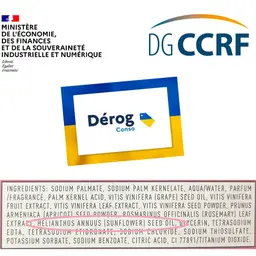
Sunflower oil: the DGCCRF grants temporary derogations to certain labelling obligations
Given the supply tensions on certain raw materials used in the manufacture of cosmetic products, and in particular sunflower oil due to the war in Ukr...
Monday, July 18, 2022
IFRA consultation on the 51st amendment of its Standards
On 30 June 2022, the International FRagrance Association (IFRA) launched a consultation on the 51st amendment to its Standards. It includes a revision...
Monday, July 11, 2022
Regulation 2022/1181: new labelling rules for products containing formaldehyde releasers
Regulation 2022/1181 of 8 July 2022, published in the Official Journal of the European Union on 11 July, amends the preamble of Annex V (authorised pr...
Monday, July 11, 2022
Regulation 2022/1176: new restrictions for Benzophenone-3 and Octocrylene
Regulation 2022/1176 of 7 July 2022, published in the Official Journal of the European Union on 8 July, amends Annex VI (authorised UV filters) to Cos...
Monday, July 11, 2022
The use of hemp derivatives in cosmetics
With the anxiety-inducing context of the pandemic and the ever-growing desire to get back to nature, we have seen an explosion in the supply of variou...
Friday, July 8, 2022
Kojic acid: the SCCS revises its final Opinion
Following the mandate given by the European Commission to the SCCS in the context of the safety assessment of substances with potential endocrine disr...
Monday, July 4, 2022
Cosmetic ingredients under the spotlight of the European Commission
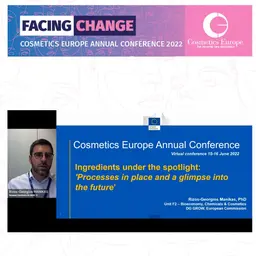
During the Cosmetics Europe Annual Conference, held on 15-16 June 2022, Rizos-Georgios Manikas, DG Grow’s Scientific and Policy Officer, gave an updat...
Previous page
Next page
Please enable JavaScript to continue using this application.