FR
EN
Confirm order
LOG IN
Forgot your password ?
Identification
You can also use the following identification providers
New user? Create an account
Demo
Subscribe
Briefs
News
All articles
Sector
3 questions to...
Authorities
Congresses
Jurisprudence
Publications
Agenda
Regulation
All articles
European Commission
SCCS
ECHA
France
IFRA
International
Focus
The checklists
Trends
All articles
Ecoresponsibility
Market
Tech / Digital
Consumers
Experts
The checklists
Ingredients
All articles
News
Ingredients search
Ingredients by categories
Products
All articles
Products news
Launches trends
Recalls of products
Pack
All articles
News
Ecoresponsability
Innovation
Basics
All articles
Dossiers
Advising consumers
The language of labels
Cosmetics glossary
E‑Library
Confirm order
Articles
…
Ingredients
All articles
News
Ingredients
:
News
Phytonadione epoxide: preliminary Opinion of the SCCS
In June 2026, the SCCS (Scientific Committee on Consumer Safety) accepted the European Commission’s mandate to assess the safety of phytonadione epoxide. The Scientific Committee on Consumer Safety has just published its preliminary opinion.
CLH classifications: Intention for Terpineol, proposal for Capric acid
On November 4, 2026, ECHA (the European Chemicals Agency) announced that terpineol was the subject of a harmonized classification and labeling (CLH) intention and that capric acid was the subject of a classification proposal.
Reminder - IFRA 52: entry into force of the Specification and Restriction Standards
On 12 December 2025, the IFRA (International Fragrance Association) published the 52nd amendment to its Standards. Eleven months later, on 12 November 2026, the new Standards on specifications and restrictions came into force for new creations.
California targets three new PFAS under Proposition 65
On 30 October 2026, the California Office of Environmental Health Hazard Assessment (OEHHA) published three notices of intent to list certain chemicals – PFAS – under Proposition 65. The consultation period is open until 30 November.
Alternatives to microbeads: an analysis by the RIVM
They have been banned since 2023. But in products where they were useful, they had to be replaced with something else. Are the alternatives to plastic microbeads safe for human health and the environment? That is the question the RIVM sought to answer in this analysis.
Tuesday, January 22, 2019
Cosmetagora 2019: what's new in cosmetic formulas?
For its 11th edition, the exhibition organized in Paris on 15 and 16 January by the French Society of Cosmetology (SFC), brought together nearly 150 e...
Sunday, January 20, 2019
Alban Muller presents: Glucohyami, plant-derived glucosamine booster of hyaluronic acid synthesis
Launched at the Cosmetic 360 show and presented again at Cosmetagora 2019, Alban Muller’s new active ingredient is a booster of hyaluronic acid, 100% ...
Thursday, January 3, 2019
Preserving preservatives: the Cosmetics Europe action plan
They are suspicious in the eyes of consumers and at the heart of the attention of the authorities, who are tending to regulate and limit them more and...
Thursday, January 3, 2019
A new glossary of cosmetic ingredients soon to be adopted
On 20 December 2018, the European Union transmitted to the WTO a draft Decision to establish a glossary of common ingredient names for use in the labe...
Wednesday, January 2, 2019
Salicylic Acid: the SCCS final Opinion
The SCCS has just published its final Opinion on the safety of Salicylic Acid. It has been adopted by written procedure on 21 December 2018, and inclu...
Wednesday, January 2, 2019
HEPB, A160: the SCCS completes its Opinions
On December 21, 2018, by written procedure, the SCCS adopted an addendum to its Opinion on the hair dye ingredient 2-Methoxy-methyl-p-phenylenediamine...
Wednesday, December 19, 2018
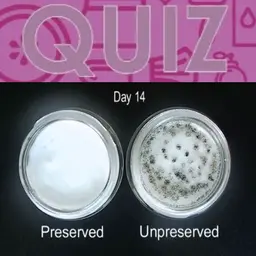
Cosmetic preservatives in 12 questions
Since 2005 and the paraben crisis, preservatives have been at the centre of controversy and consumer concern, far more so than any other category of c...
Tuesday, December 18, 2018
Reduce surfactants? The Greentech's solution
When it’s less, it’s better? This is sometimes also true in cosmetics. Raw material suppliers are therefore competing with each other in their imagina...
Thursday, December 13, 2018
StemProtect: Inabata's latest innovation
This new cosmetic active complex to protect and repair against damages related to exposome-induced oxidative stress in skin is an antipollution active...
Tuesday, December 11, 2018
REACH: new registration requirements for nanomaterials
On 3 December 2018, the European Commission adopted the revision of several Annexes of the REACH Regulation, including a specific revision of the info...
Monday, December 10, 2018
Labelling of allergens: the European Commission launches its impact assessment
Since the CSSC opinion recommending the labelling on cosmetic packaging of more than 80 fragrance components with allergenic potential (instead of 26 ...
Monday, December 3, 2018
When cosmetic ingredients are governed by other regulations
It is not absurd to think that the ingredients used in cosmetic products are totally governed by Cosmetics Regulation 1223/2009, its provisions and ob...
Previous page
Next page
Please enable JavaScript to continue using this application.