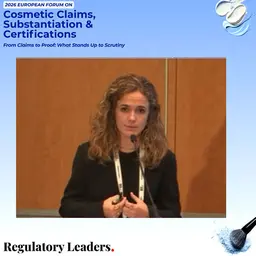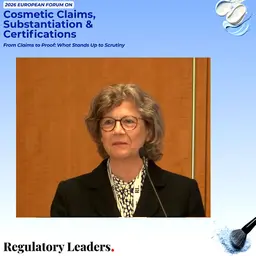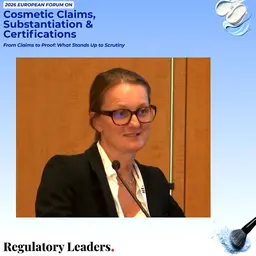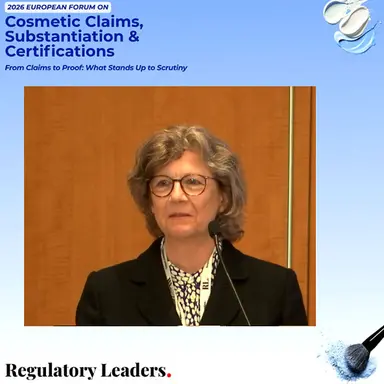
At the European Forum on “Cosmetic Claims, Justification and Certifications”, held on 10 September 2026, Theresa Callaghan, a consultant and author of several books on the subject of cosmetic claims, explained what may at first appear to be a paradox: when weighing up the risks, rigour and actual cost of the evidence required to substantiate a claim, the cheapest study is rarely the least expensive…
“The main point I’m going to make in this presentation stems from questions I’ve been asked time and again throughout my career,” began Theresa Callaghan. “To substantiate a claim, can this study be carried out at a lower cost? Do we really need so many volunteers? Can’t we just use data from suppliers?” Spoiler: Admittedly, attempts to save money are not unreasonable (everyone has a budget to stick to), but the cost of a company specialising in clinical trials or consumer testing is not limited to the invoice expressed in hard cash. It may well become apparent much later on, if the data they have provided fails to substantiate the claims that have been made…
When “cheap” masks hidden costs
Theresa Callaghan goes even further, arguing that choosing the cheapest study is often the most costly decision a company or brand can make… even if we’re not just talking about money, but perhaps also delays, unusable evidence, rewrites, changes to claims, disputes or a loss of credibility. Because, in fact, it is not the budget that determines which study is necessary, but science itself, taking into account all the implications – which are not necessarily immediately quantifiable… and …