In a ruling dated March 26, 2026, the Court of Justice of the European Union ruled on the criteria for determining whether a trademark is misleading or likely to mislead the public. The products in question are in the luxury sector, and the trademarks are perceived as falsely claiming a history dating back several centuries.
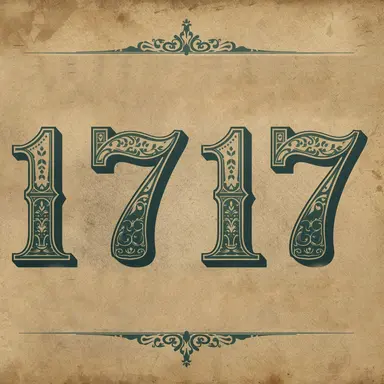
The French company Fauré Le Page Paris, founded in 2009, acquired the “Fauré Le Page” trademark and filed trademark applications featuring the designation “Fauré Le Page Paris 1717” for leather goods.
The company Goyard ST-Honoré sought the cancellation of these trademarks on the grounds that the designation “1717” falsely suggests the existence of a house founded in the 18th century and the transmission of ancient craftsmanship. However, Maison Fauré Le Page ceased operations in 1992.
In response to a request for a preliminary ruling from the Court of Cassation, the CJEU was called upon to rule on the interpretation of Article 3(1)(g) of Directive 2008/95: Does the inclusion of a fictitious date in a trademark, which conveys erroneous information regarding the seniority, reliability, and expertise of the manufacturer of the goods—and, consequently, regarding one of the non-material characteristics of those goods—constitute actual deception or a sufficiently serious risk of deceiving the consumer?
➡️ The Court notes that the ground for invalidity set forth in Article 3(1)(g) of Directive 2008/95 requires deception regarding a characteristic of the goods or services covered by the trademark, and not regarding a characteristic of its proprietor.
➡️ She notes, however, that the …