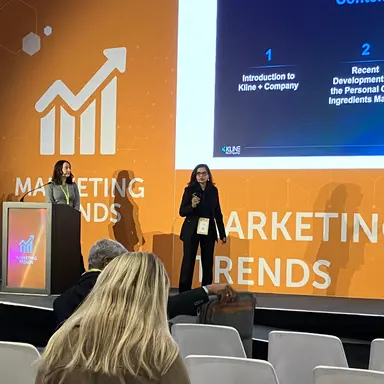
Inclusivity is no longer just a selling point. It is a must for product development. That was the message delivered by Sunanda Desai, Vice President at Kline & Company, and Élodie Alves, Senior Analyst, during a conference held as part of the in-cosmetics Global 2026 trade show (in Paris from April 14 to 16).
“Inclusivity has long been reduced to a marketing message. Today, it’s a product development mandate,” summarizes Sunanda Desai. Inclusive brands are growing at a rate about 1.5 times faster than their competitors. And the pressure is coming from consumers—especially younger ones—who expect concrete proof.
Redefining inclusivity
For Kline & Company, inclusivity rests on five dimensions:
• Hair diversity
• Skin tones and undertones
• Gender expression
• Sensory needs and varying physical abilities
• Life stages (from pregnancy to menopause, for example)
This is not a new topic. MAC paved the way as early as 1984 with its first multi-shade ranges. Carol’s Daughter focused on textured hair as early as 1993. Then came Fenty Beauty in 2017 with its 40 foundation shades, and more recently Topicals, which focuses on chronic skin conditions. “Inclusivity is gaining momentum. And the opportunities ahead of us are still considerable,” emphasizes Sunanda Desai.
Skin care: persistent blind spots
Progress has been made. Product lines for sensitive skin have proliferated, led by brands like La Roche-Posay and CeraVe. Active ingredients targeting hyperpigmentation (niacinamide, tranexamic acid, vitamin C) have become widely available.
“But gaps remain,” notes Élodie Alves. “Clinical testing on …