The European Union initiated a set of legislative acts aimed at improving consumer protection and ensuring reliability sustainability-related declarations.
As consumers have become increasingly aware of environmental challenges, they have also started to expect brand-owners to share their commitment to sustainability and ethical business practices. In response to this growing demand, consumer products, including cosmetics, have increasingly been marketed using claims related to sustainability, environmental performance, and ethical production.
While many of these claims were initially intended to reflect genuine efforts towards more sustainable products and production, environmental messages gradually became a powerful marketing tool, often supported by scarce substantiation and insufficient evidence. As a result, concerns regarding “greenwashing” prompted consumers to advocate for greater transparency and clearer rules governing environmental claims.
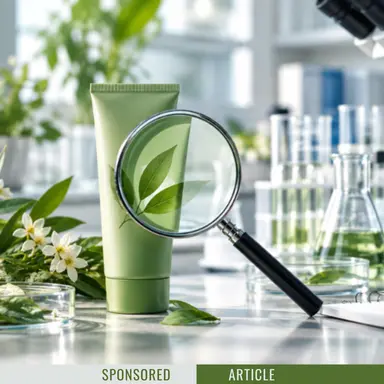
To address these concerns, the European Union initiated a set of legislative acts aimed at improving consumer protection and ensuring reliability sustainability-related declarations.
Directive (EU) 2024/825: what it is and its regulatory background
Directive (EU) 2024/825 was published in the Official Journal of the European Union on 28 February 2024. It amends both Directive 2005/29/EC on unfair commercial practices and Directive 2011/83/EU on consumer rights.
The Directive aims to empower consumers to make more informed purchasing decisions by ensuring they receive reliable and transparent information about the environmental and sustainability characteristics of products. To achieve this objective, it introduces new measures to combat greenwashing and prohibits a range of misleading environmental claims and commercial practices.
The prohibition of generic environmental claims: scope, exceptions and what beauty brands need to know
1/ What is a generic environmental claim?
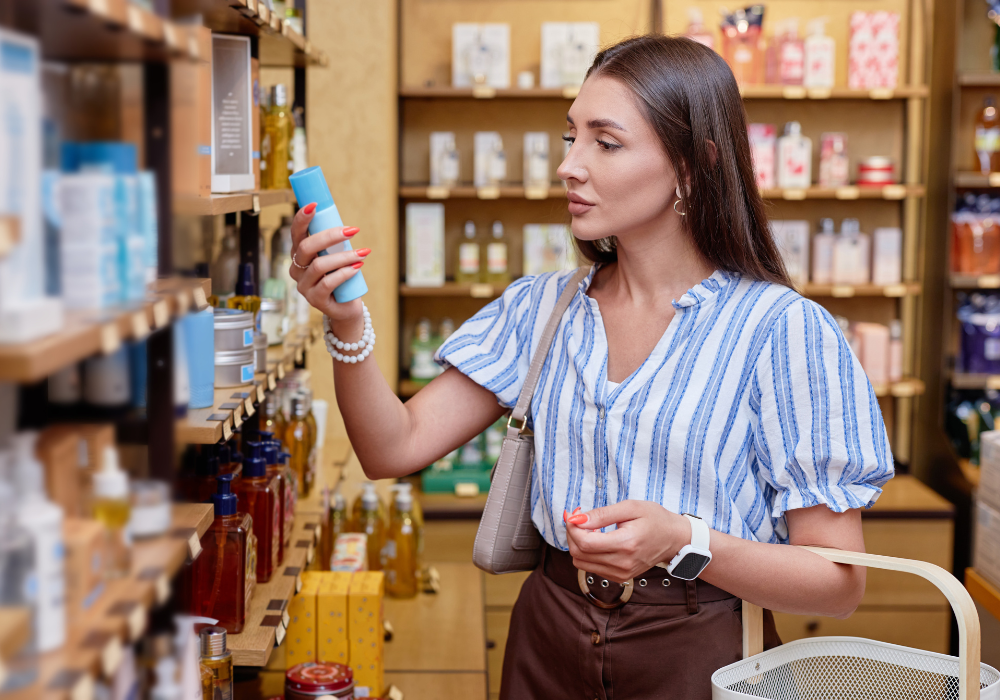
One of the most significant changes introduced by Directive (EU) 2024/825 is the prohibition of generic environmental claims that are not supported by clear, specific and verifiable information. The Directive defines a generic environmental claim as any environmental statement, whether written, oral or audiovisual, whose meaning is not clearly specified on the same medium. Common examples include broad claims such as “eco-friendly”, “green”, “environmentally friendly”, “nature’s friend” or “gentle on the environment”.
Brands should be cautious not only in relation to claims displayed on product packaging, but also across all forms of marketing and advertising. The broad definition adopted by the Directive makes it clear that its scope extends to the full range of commercial communications, regardless of the medium used. In an era where online platforms and digital marketing are becoming a prominent player, cosmetics manufacturers must carefully review all levels of advertising, assessing what is being conveyed to consumers and how.
With the regulatory landscape becoming increasingly complex, Obelis Group supports cosmetics manufacturers in reviewing their environmental claims and ensuring their communications are aligned with applicable EU requirements.
From September 27th, 2026, such claims will be prohibited unless they are supported by recognised excellent environmental performance. This may include certification under the EU Ecolabel or certain officially recognised Type I ecolabelling schemes, such as the Nordic Swan or Blue Angel labels.
Need a clear overview of the deadlines taking effect? Explore our 2026 timetable for cosmetics businesses.
2/ When can environmental claims still be used?
The prohibition does not apply where the environmental benefit is clearly explained. A claim will not be regarded as “generic” if its meaning is specified in clear terms on the same medium where the claim appears.
For example, a statement such as “100% of the electricity used to manufacture this packaging comes from renewable sources” constitutes a specific environmental claim and falls outside the prohibition, provided it can be properly substantiated. By contrast, a vague statement such as “climate-friendly packaging” without further explanation would generally be prohibited.
However, it is important to stress that all environmental claims, regardless of their wording, must be backed by appropriate and verifiable substantiation.
Packaging design and implicit green claims
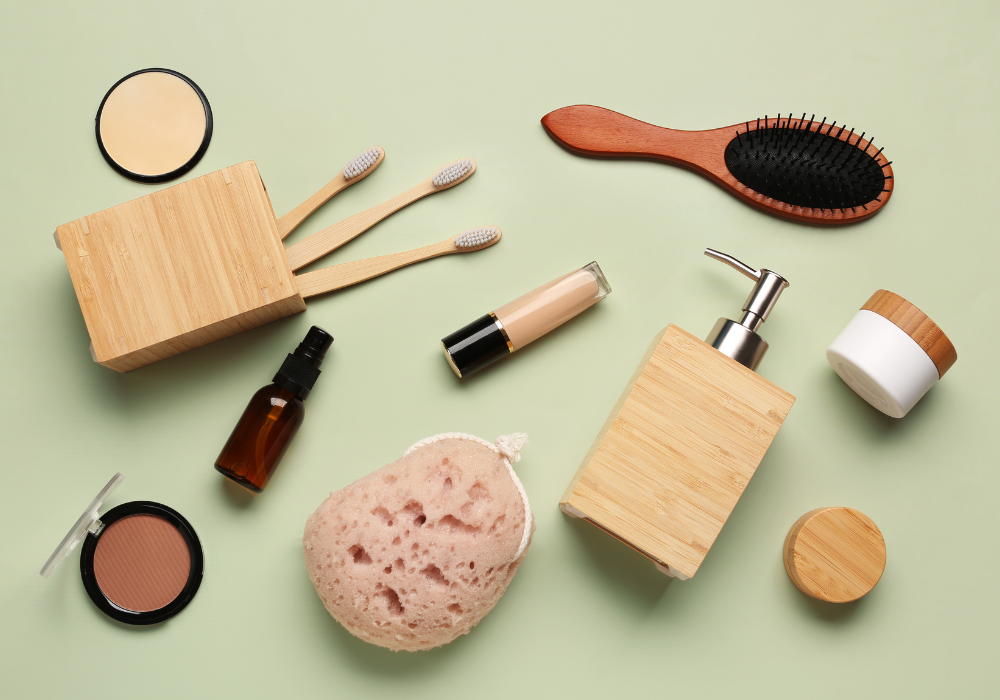
The new rules extend beyond written claims. Packaging design, colours, symbols and imagery may also contribute to the overall environmental message perceived by consumers.
According to existing guidance under the Unfair Commercial Practices Directive, visual elements such as green leaves, water droplets, forests, animals or predominantly green colour schemes can, depending on the context, be interpreted as implicit environmental claims. The use of such imagery alongside sustainability-related wording or logos could therefore attract regulatory scrutiny if it creates an exaggerated or misleading impression of environmental benefits.
As with all unfair-practice assessments, the benchmark remains the perception of the average consumer.
And packaging compliance doesn’t stop at environmental claims. With the EU Packaging and Packaging Waste Regulation (PPWR) becoming applicable on 12 August 2026, now is the time to understand what’s changing. Read our latest article to discover the key PPWR requirements and what businesses should prepare for.
Compliance requirements for existing products
An important aspect for beauty brands to consider is that the new requirements are not limited to products introduced after September 27th, 2026. They will also affect products that are already circulating within the supply chain, including stock that has been manufactured, distributed or placed on the market before the application date.
Recognising the operational challenges this may create, the Consumer Protection Cooperation (CPC) Network has indicated that businesses are expected to make genuine and reasonable efforts to align existing products and marketing materials with the new legal framework. Depending on the circumstances, this may involve updating and revising online and off-line promotional material, adapting packaging through relabelling solutions (e.g. stickers), modifying upcoming packagings, or providing clarifying information at the point of sale.
Although the Directive does not establish any specific exemption for products already on the market, enforcement authorities may take a pragmatic and proportionate approach when assessing existing stock. Nevertheless, companies should not view this as a grace period. Businesses are expected to proactively identify potentially problematic claims and implement corrective measures wherever feasible by September 27th, 2026.
Obelis has supported 7,000+ manufacturers across 90+ countries in resolving such issues and helps beauty brands approach compliance with a global perspective, so your labels and claims work in every market you serve.
About Obelis
Obelis Group is a leading regulatory and compliance consultancy based in Brussels, specializing in cosmetics, medical devices, and other regulated products. With over 35 years of experience, we help brands navigate complex EU, UK, US, Canadian, Swiss and Turkish regulations to achieve and maintain compliance. Our mission is to make market access faster, safer, and simpler.
Want to ensure your products are globally compliant?
Let’s talk!
References
• COSlaw. (2024). Fighting Greenwashing: the EU amends the Unfair Commercial Practices Directive. Retrieved on 19/08/2026.
• COSlaw. (2026). Environmental claims after 27 September 2026: strengthening consumer protection against greenwashing. Retrieved on 03/09/2026.
• European Parliament and Council. (2024). Directive (EU) 2024/825 of 28 February 2024 amending Directives 2005/29/EC and 2011/83/EU as regards empowering consumers for the green transition through better protection against unfair practices and through better information. Retrieved on 19/08/2026.
• European Commission. (2026). Common understanding on old stock situations under Directive (EU) 2024/825 on Empowering Consumers for the Green Transition. Retrieved on 19/08/2026.
• European Commission. (2026). Questions & Answers. Retrieved on 19/08/2026.