FR
EN
Confirm order
LOG IN
Forgot your password ?
Identification
You can also use the following identification providers
New user? Create an account
Demo
Subscribe
Briefs
News
All articles
Sector
3 questions to...
Authorities
Congresses
Jurisprudence
Publications
Agenda
Regulation
All articles
European Commission
SCCS
ECHA
France
IFRA
International
Focus
The checklists
Trends
All articles
Ecoresponsibility
Market
Tech / Digital
Consumers
Experts
The checklists
Ingredients
All articles
News
Ingredients search
Ingredients by categories
Products
All articles
Products news
Launches trends
Recalls of products
Pack
All articles
News
Ecoresponsability
Innovation
Basics
All articles
Dossiers
Advising consumers
The language of labels
Cosmetics glossary
E‑Library
Confirm order
Articles
…
Ingredients
All articles
News
Ingredients
:
News
REACH restriction on Octocrylene: ECHA SEAC final Opinion
At its meeting on September 15–16, 2026, ECHA’s SEAC (Committee for Socio-Economic Analysis) adopted its final opinion on the proposal to restrict octocrylene, submitted by France.
Measuring benzene in sunscreens: the Australian TGA shares its method
The TGA (Therapeutic Goods Administration), which regulates cosmetic products in Australia, made available its analytical method for detecting and quantifying benzene residues in suncare products. Professionals are encouraged to use it as part of their routine quality control procedures.
Beauty goes green, but can you prove it? New rules on environmental claims take effect
The European Union initiated a set of legislative acts aimed at improving consumer protection and ensuring reliability sustainability-related declarations.
Rosin and its derivatives, propylparaben, and spearmint essential oil: ECHA’s RAC adopts its opinions
ECHA (the European Chemicals Agency) has just published the minutes of the 78th meeting of its RAC (Risk Assessment Committee), which took place in early September 2026. Opinions on several cosmetic ingredients were adopted, resulting in four classifications as reprotoxic and one as an environmental endocrine disruptor.
Consultation in Australia on 4-MBC
On 11 September 2026, the TGA (Therapeutic Goods Administration), which regulates cosmetic products in Australia, launched a one-month consultation on the conditions of use for the UV filter 4-MBC (4-Methylbenzylidene Camphor).
Monday, April 18, 2016
Hair dyes: SCCS publishes two Opinions
The SCCS has just published its Opinions on cosmetic hair dyes ingredients N,N'-Bis-(2-hydroxyethyl)-2-nitro-p-phenylamine and Tetrabromophenol Blue. ...
Wednesday, April 13, 2016
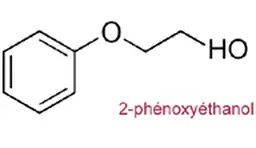
Phenoxyethanol (EGPhE)
It is known due its record about its safety, and also because it is very often mentioned as "Phenoxyethanol-free"… This wording is then a selling poin...
Wednesday, April 13, 2016
Hair dyes: the SCCS revised three Opinions
On 16 March 2016, during its plenary meeting, the SCCS three Opinions on the cosmetic hair dye ingredients Basic Blue 124, HC Yellow No.16 (B123), and...
Wednesday, April 13, 2016
HC Orange No.6: request for Opinion to SCCS
The safety of the new cosmetic hair dye ingredient HC Orange No. 6 will be evaluated by the SCCS. The request from the European Commission was publish...
Tuesday, April 12, 2016
SCCS: a reassessment of Butylphenyl methylpropional is foreseen
On August 12, 2015, the SCCS has adopted an Opinion on the fragrance ingredient Butylphenyl methylpropional. This Opinion has just been revised, durin...
Monday, April 11, 2016
Phenoxyethanol is safe, says SCCS
The European Scientific Committee on Consumer Safety (SCCS) has just published its Opinion on Phenoxyethanol. It has been adopted at the plenary meeti...
Tuesday, April 5, 2016
Peanut oil, Wheat proteins: Consultation by European Commission
On April 1st, the European Commission has launched a public consultation on its proposal to make regulations evolve as regards two cosmetic ingredient...
Monday, April 4, 2016
Methylisothiazolinone: Consultation by European Commission
On April 1st, the European Commission has launched a public consultation on its proposal to make regulations evolve as regards the cosmetic ingredient...
Monday, April 4, 2016
Cosmetic allergens
They are among the cosmetic ingredients most often denounced by the press or consumer organisations for their potential to harm health. They are omnip...
Wednesday, March 30, 2016
CoRAP update for 2016-2018 adopted
As expected, ECHA has adopted the updated Community rolling action plan (CoRAP) for 2016-2018 with 138 substances to be evaluated. According to the pl...
Monday, March 21, 2016
ECHA: RAC concludes on restricting D4 and D5
In its plenary meeting held from 29 February to 10 March, the Committee for Risk Assessment (RAC) agreed to support the proposal of the UK to restrict...
Wednesday, March 16, 2016
A Danish evaluation of sensitizing fragrance substances
The project “Evaluation of selected sensitising fragrance substances” was initiated by the Danish Environmental Protection Agency as a LOUS (List of U...
Previous page
Next page
Please enable JavaScript to continue using this application.