FR
EN
Confirm order
LOG IN
Forgot your password ?
Identification
You can also use the following identification providers
New user? Create an account
Demo
Subscribe
Briefs
News
All articles
Sector
3 questions to...
Authorities
Congresses
Jurisprudence
Publications
Agenda
Regulation
All articles
European Commission
SCCS
ECHA
France
IFRA
International
Focus
The checklists
Trends
All articles
Ecoresponsibility
Market
Tech / Digital
Consumers
Experts
The checklists
Ingredients
All articles
News
Ingredients search
Ingredients by categories
Products
All articles
Products news
Launches trends
Recalls of products
Pack
All articles
News
Ecoresponsability
Innovation
Basics
All articles
Dossiers
Advising consumers
The language of labels
Cosmetics glossary
E‑Library
Confirm order
Articles
…
Ingredients
All articles
News
Ingredients
:
News
Phytonadione epoxide: preliminary Opinion of the SCCS
In June 2026, the SCCS (Scientific Committee on Consumer Safety) accepted the European Commission’s mandate to assess the safety of phytonadione epoxide. The Scientific Committee on Consumer Safety has just published its preliminary opinion.
CLH classifications: Intention for Terpineol, proposal for Capric acid
On November 4, 2026, ECHA (the European Chemicals Agency) announced that terpineol was the subject of a harmonized classification and labeling (CLH) intention and that capric acid was the subject of a classification proposal.
Reminder - IFRA 52: entry into force of the Specification and Restriction Standards
On 12 December 2025, the IFRA (International Fragrance Association) published the 52nd amendment to its Standards. Eleven months later, on 12 November 2026, the new Standards on specifications and restrictions came into force for new creations.
California targets three new PFAS under Proposition 65
On 30 October 2026, the California Office of Environmental Health Hazard Assessment (OEHHA) published three notices of intent to list certain chemicals – PFAS – under Proposition 65. The consultation period is open until 30 November.
Alternatives to microbeads: an analysis by the RIVM
They have been banned since 2023. But in products where they were useful, they had to be replaced with something else. Are the alternatives to plastic microbeads safe for human health and the environment? That is the question the RIVM sought to answer in this analysis.
Tuesday, April 19, 2022
Europe notifies new regulation for 4 cosmetic ingredients (EDs, colorant, UV filters)
The European Union has just transmitted to the WTO a draft Regulation aiming at modifying Annexes III (restricted substances) and VI (authorised UV fi...
Tuesday, April 19, 2022
Endocrine disruptors: OPSS call for data
On 5 April 2022, the Office for Product Safety and Standards (OPSS), which regulates cosmetic products in the UK, launched a call for data for five in...
Tuesday, April 19, 2022
Proposed CLH classification for Propylparaben
On 11 April 2022, the European Chemicals Agency (ECHA) launched a consultation on a harmonised classification and labelling proposal from Belgium for ...
Tuesday, April 19, 2022
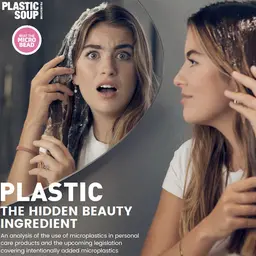
Polemic around microplastics in cosmetics
On 7 April 2022, the NGO “Plastic Soup Foundation” published a report denouncing the presence of microplastics in 87% of cosmetic products from the 10...
Tuesday, April 12, 2022
A recent study to confirm the effectiveness and safety of organic sunscreens
The effectiveness, SPF level and safety of organic sunscreen products, based on mineral screens (Titanium Dioxide and Zinc Oxide), are regularly quest...
Monday, April 11, 2022
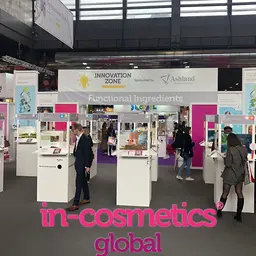
in-cosmetics Global 2022 under the sign of a re-unification... and a new future
After two years of absence due to the health crisis, the star show dedicated to cosmetic ingredients finally took place. Held from April 5 to 7, 2022 ...
Monday, April 11, 2022
The award-winning ingredients of in-cosmetics Global 2022
With 180 competing ingredients, the traditional Awards of the in-cosmetics Global trade fair, which after the Covid crisis held its first physical edi...
Monday, April 4, 2022
Triclosan and Triclocarban: Scientific Advice of the SCCS
Following the publication of a first list of 14 substances suspected of acting as endocrine disruptors to be assessed as a priority, and the subsequen...
Monday, April 4, 2022
α- and β-arbutin: Preliminary Opinion of the SCCS
Following the mandate given by the European Commission to the SCCS in June 2021 due to their potential to release Hydroquinone, a substance prohibited...
Tuesday, March 29, 2022
The CoRAP 2022-2024 in lean mode
ECHA has published the updated Community rolling action plan (CoRAP) for the years 2022, 2023 and 2024. It includes a total of 27 substances to be ass...
Tuesday, March 29, 2022
8 "cosmetic" ingredients in CLH consultation
The European Chemicals Agency (ECHA) has just launched consultations on proposals for the classification and harmonised labelling (or classification a...
Tuesday, March 29, 2022
ECHA: RAC Opinions on classification of 4 "cosmetic" ingredients
The Risk Assessment Committee (RAC) of the European Chemicals Agency (ECHA) has just adopted its Opinions on the classification and harmonised labelli...
Previous page
Next page
Please enable JavaScript to continue using this application.