FR
EN
Confirm order
LOG IN
Forgot your password ?
Identification
You can also use the following identification providers
New user? Create an account
Demo
Subscribe
Briefs
News
All articles
Sector
3 questions to...
Authorities
Congresses
Jurisprudence
Publications
Agenda
Regulation
All articles
European Commission
SCCS
ECHA
France
IFRA
International
Focus
The checklists
Trends
All articles
Ecoresponsibility
Market
Tech / Digital
Consumers
Experts
The checklists
Ingredients
All articles
News
Ingredients search
Ingredients by categories
Products
All articles
Products news
Launches trends
Recalls of products
Pack
All articles
News
Ecoresponsability
Innovation
Basics
All articles
Dossiers
Advising consumers
The language of labels
Cosmetics glossary
E‑Library
Confirm order
Articles
…
Ingredients
All articles
News
Ingredients
:
News
Measuring benzene in sunscreens: the Australian TGA shares its method
The TGA (Therapeutic Goods Administration), which regulates cosmetic products in Australia, made available its analytical method for detecting and quantifying benzene residues in suncare products. Professionals are encouraged to use it as part of their routine quality control procedures.
Beauty goes green, but can you prove it? New rules on environmental claims take effect
The European Union initiated a set of legislative acts aimed at improving consumer protection and ensuring reliability sustainability-related declarations.
Rosin and its derivatives, propylparaben, and spearmint essential oil: ECHA’s RAC adopts its opinions
ECHA (the European Chemicals Agency) has just published the minutes of the 78th meeting of its RAC (Risk Assessment Committee), which took place in early September 2026. Opinions on several cosmetic ingredients were adopted, resulting in four classifications as reprotoxic and one as an environmental endocrine disruptor.
Consultation in Australia on 4-MBC
On 11 September 2026, the TGA (Therapeutic Goods Administration), which regulates cosmetic products in Australia, launched a one-month consultation on the conditions of use for the UV filter 4-MBC (4-Methylbenzylidene Camphor).
IFRA 52: the end-of-consultation letter
On 31 August 2026, the IFRA (International Fragrance Association) issued its End-of-Consultation Letter on the 52nd Amendment to its Standards, the consultation period for which ended on 12 June.
Thursday, December 2, 2021
HAA299 (nano): Final Opinion of the SCCS
Following the mandate given by the European Commission to the SCCS in October 2020, the Scientific Committee has just published its final Opinion on t...
Thursday, December 2, 2021
Reminder: new labelling obligations for three hair dyes
This 3 December 2021 marks the entry into force of the new labelling obligations under Regulation 2020/1683. They involve three hair dye ingredients, ...
Monday, November 15, 2021
Kojic Acid: the SCCS preliminary Opinion
Following the mandate given by the European Commission to the SCCS in the context of the safety assessment of substances with potential endocrine disr...
Monday, November 15, 2021
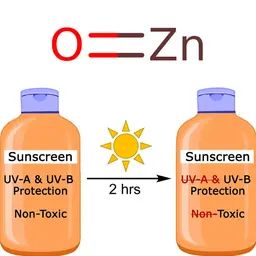
Changes in efficacy and toxicity of sunscreens due to zinc oxide
According to a recent study published in Photochemical & Photobiological Sciences, the Official Journal of the European Photochemistry Association...
Monday, November 15, 2021
Skin'Calm by Berkem: the new anti-maskne active ingredient
According to a study by the NPD Group, sales of facial care products for acne or blemishes rose by 32% between 2019 and 2020. This increase can be exp...
Monday, November 15, 2021
Proposed CLH classification for Benzotriazole
On 8 November 2021, the European Chemicals Agency (ECHA) launched a consultation on a harmonised classification and labelling proposal from Germany fo...
Monday, November 8, 2021
Publication of the 4th Regulation on CMRs
The European Union has just published Regulation 2021/1902, the 4th annual text aiming to ban or regulate substances recently classified as CMR. It co...
Monday, November 8, 2021
Methyl Salicylate: Final Opinion of the SCCS
Following the mandate given by the European Commission to the SCCS in September 2020, the Scientific Committee has just published its final Opinion on...
Monday, October 25, 2021
Benzophenone-3, Octocrylene: forthcoming restrictions notified by Europe to the WTO
On 14 October 2021, the European Union transmitted to the WTO a draft Regulation to introduce new use restrictions for two UV filters, Benzophenone-3 ...
Monday, October 25, 2021
Europe notifies WTO of changes to "Contains formaldehyde" warning
On 14 October 2021, the European Union transmitted to the WTO a draft Regulation to introduce changes in the labelling rules for cosmetic products con...
Monday, October 25, 2021
Cosmébio: the Ingredients Trophies 2021
On 14 October, on the occasion of its second “Ingredients Meeting”, the Cosmébio association awarded its Ingredients Trophies for 2021 in two categori...
Tuesday, October 19, 2021
Butylparaben, Homosalate: requests for SCCS Opinions
Following the publication of a list of suspected endocrine disruptors to be assessed on a priority basis, and the subsequent call for data, the Europe...
Previous page
Next page
Please enable JavaScript to continue using this application.