FR
EN
Confirm order
LOG IN
Forgot your password ?
Identification
You can also use the following identification providers
New user? Create an account
Demo
Subscribe
Briefs
News
All articles
Sector
3 questions to...
Authorities
Congresses
Jurisprudence
Publications
Agenda
Regulation
All articles
European Commission
SCCS
ECHA
France
IFRA
International
Focus
The checklists
Trends
All articles
Ecoresponsibility
Market
Tech / Digital
Consumers
Experts
The checklists
Ingredients
All articles
News
Ingredients search
Ingredients by categories
Products
All articles
Products news
Launches trends
Recalls of products
Pack
All articles
News
Ecoresponsability
Innovation
Basics
All articles
Dossiers
Advising consumers
The language of labels
Cosmetics glossary
E‑Library
Confirm order
Articles
…
Ingredients
All articles
News
Ingredients
:
News
Measuring benzene in sunscreens: the Australian TGA shares its method
The TGA (Therapeutic Goods Administration), which regulates cosmetic products in Australia, made available its analytical method for detecting and quantifying benzene residues in suncare products. Professionals are encouraged to use it as part of their routine quality control procedures.
Beauty goes green, but can you prove it? New rules on environmental claims take effect
The European Union initiated a set of legislative acts aimed at improving consumer protection and ensuring reliability sustainability-related declarations.
Rosin and its derivatives, propylparaben, and spearmint essential oil: ECHA’s RAC adopts its opinions
ECHA (the European Chemicals Agency) has just published the minutes of the 78th meeting of its RAC (Risk Assessment Committee), which took place in early September 2026. Opinions on several cosmetic ingredients were adopted, resulting in four classifications as reprotoxic and one as an environmental endocrine disruptor.
Consultation in Australia on 4-MBC
On 11 September 2026, the TGA (Therapeutic Goods Administration), which regulates cosmetic products in Australia, launched a one-month consultation on the conditions of use for the UV filter 4-MBC (4-Methylbenzylidene Camphor).
IFRA 52: the end-of-consultation letter
On 31 August 2026, the IFRA (International Fragrance Association) issued its End-of-Consultation Letter on the 52nd Amendment to its Standards, the consultation period for which ended on 12 June.
Wednesday, January 15, 2020
Indigofera Tinctoria: the SCCS' Opinion
The SCCS has just published its Opinion on the safety of the hair dye ingredient Indigofera Tinctoria. It was adopted on 10 January 2020 by written pr...
Wednesday, January 15, 2020
Canada: Amendments to the Cosmetic Ingredient Hotlist under consideration
Health Canada has just released a “Notice to Stakeholders” relating to several proposed amendments to the Cosmetic Ingredient Hotlist. The purpose of ...
Tuesday, January 14, 2020
IFRA publishes the 49th Amendment to its Standards
The long-awaited 49th Amendment to the IFRA Standards has just been published on 10 January 2020. It incorporates new data, new methods and new types ...
Monday, January 13, 2020
A Swiss Consumers' Federation is calling for a ban on three cosmetic ingredients
In a press release made public on 7 January 2020, the FRC (French-speaking Consumers’ Federation) denounces the “timidity” of the Swiss Federal Counci...
Monday, January 13, 2020
Skin microbiome: Codif's favourite playground
Initially a source of disgust, bacteria are now widely used by the scientific community, including in cosmetic research. For a few years now, ingredie...
Wednesday, January 8, 2020
BASF is committed to eco-responsibility
Because the sustainability of raw materials is as important to consumers as the efficiency of finished products, manufacturers are increasingly concer...
Tuesday, January 7, 2020
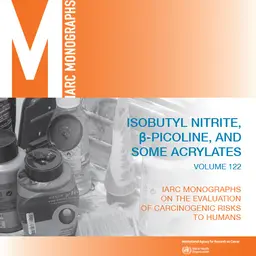
Two acrylates classified as "possibly carcinogenic to humans" by the IARC
Volume 122 of the recently published IARC Monographs contains the results of the carcinogenicity assessment of six substances, including two acrylates...
Monday, January 6, 2020
French National Assembly votes to ban microplastics in cosmetics
It was through an amendment (CD1857) to the law on the fight against waste and the circular economy that the ban on microplastics in rinse-off and lea...
Monday, January 6, 2020
The ANSES programme for 2020
At the end of 2019, ANSES (National Agency for Food, Environmental and Occupational Health and Safety) published its work programme for 2020, which se...
Tuesday, December 24, 2019
European Commission public consultation on endocrine disruptors
European Union legislation on chemicals has been developed at different times and, in some cases, with different objectives. Different regulatory appr...
Tuesday, December 24, 2019
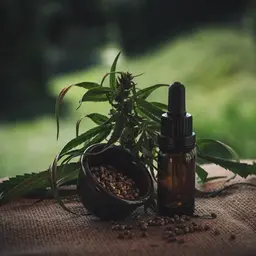
Cannabis seizes cosmetics
Recently, cannabis and its derivatives have found a prominent place in the cosmetics industry. This market represents $12 billion worldwide, according...
Monday, December 23, 2019
Zinc Pyrithione: Opinion of the SCCS
The SCCS has just published its Opinion on the safety of the preservative and anti-dandruff agent Zinc Pyrithione in cosmetic products, on behalf of t...
Previous page
Next page
Please enable JavaScript to continue using this application.