FR
EN
Confirm order
LOG IN
Forgot your password ?
Identification
You can also use the following identification providers
New user? Create an account
Demo
Subscribe
Briefs
News
All articles
Sector
3 questions to...
Authorities
Congresses
Jurisprudence
Publications
Agenda
Regulation
All articles
European Commission
SCCS
ECHA
France
IFRA
International
Focus
The checklists
Trends
All articles
Ecoresponsibility
Market
Tech / Digital
Consumers
Experts
The checklists
Ingredients
All articles
News
Ingredients search
Ingredients by categories
Products
All articles
Products news
Launches trends
Recalls of products
Pack
All articles
News
Ecoresponsability
Innovation
Basics
All articles
Dossiers
Advising consumers
The language of labels
Cosmetics glossary
E‑Library
Confirm order
Articles
…
News
All articles
Sector
3 questions to...
Authorities
Congresses
Jurisprudence
Publications
Agenda
News
:
Publications
ICCS guide to the assessment of eye damages and irritations
On November 5, 2026, the ICCS (International Collaboration on Cosmetic Safety) published a guide to best practices for serious eye damage and eye irritation assessment using new approach methodologies for substances in cosmetic products.
Alternatives to microbeads: an analysis by the RIVM
They have been banned since 2023. But in products where they were useful, they had to be replaced with something else. Are the alternatives to plastic microbeads safe for human health and the environment? That is the question the RIVM sought to answer in this analysis.
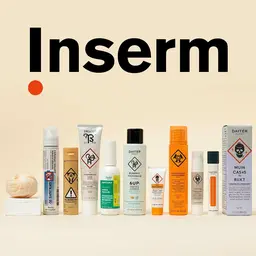
Cosmetics as a source of chemical pollutants: the study that points the finger
According to a study conducted by researchers at Inserm and published in the journal Environment International, using fewer (or more carefully chosen) cosmetic products can rapidly reduce exposure to certain chemical pollutants and endocrine disruptors. The researchers are calling for regulatory measures regarding the composition of products and their packaging…
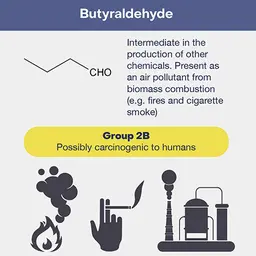
IARC classifies Butyraldehyde in Group 2B
On March 27, 2026, the International Agency for Research on Cancer (IARC) announced the publication in The Lancet Oncology of the results of its assessment of the carcinogenicity of Butyraldehyde, a fragrance ingredient.
Two new standards for SPF measurement
The two long-awaited new standards, alternatives to ISO 24444 for measuring SPF in cosmetic products, were published on 19 December 2024. They are now available in the International Organization for Standardization’s online shop.
Monday, March 4, 2024
New evidence against Triclosan
Inserm (the French National Institute for Health and Medical Research) is continuing its investigations into the effects on human health of Triclosan,...
Monday, February 19, 2024
Exposure to fragrance ingredients well below the thresholds of concern, according to the RIFM
According to an analysis by the RIFM (Research Institute for Fragrance Materials), exposure to fragrance ingredients in consumer products is low, and ...
Monday, May 22, 2023
Nano-TiO2: a new alert from INRAE
Previous work by INRAE (Institut national de recherche pour l’agriculture, l’alimentation et l’environnement - French National Research Institute for ...
Monday, December 12, 2022
The combination of UV filters and microplastics makes heavy metals more harmful
According to a recent study by a team of researchers from Hong Kong Baptist University, microplastics have the property of aggregating more chromium i...
Monday, October 24, 2022
PFOA (a dangerous PFAS derivative) can cross the skin barrier
According to a study conducted by a scientist from the BfR (German Federal Institute for Risk Assessment), PFOA (perfluorooctanoic acid), a degradatio...
Monday, October 10, 2022
Alteration of the gut microbiota by microplastics
There is mounting evidence that microplastics are harmful to human health. Degraded in the form of microplastics, these compounds are found in our foo...
Monday, October 3, 2022
Nanoplastics disrupt cellular processes in the liver and lungs
According to a recent study, published in the Journal Environmental Science & Technology, plastic nanoparticles could enter liver and lung cells a...
Wednesday, September 21, 2022
How nanoparticles enter the brain
A recent study, published in the Journal PNAS - Proceedings of the National Academy of Science of the United States of America, and relayed on EUON (t...
Tuesday, September 6, 2022
A new model to investigate the effects of cosmetics on skin microorganisms in vitro
This recent study describes a new in vitro model using a leather surface to evaluate the efficacy on the skin of prebiotic substances incorporated in ...
Tuesday, August 30, 2022
Swedish study assesses PFAS emissions from cosmetics
In this study, the prevalence of PFAS in cosmetic products on the European market was investigated through a combination of database mining and compre...
Monday, August 29, 2022
TiO2 and Carbon black nanoparticles may promote Alzheimer's disease
According to a recent study by a team of French researchers, titanium dioxide and carbon black nanoparticles have the ability to disrupt neuronal home...
Thursday, July 28, 2022
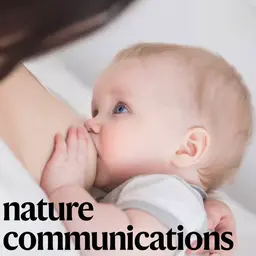
Triclosan: babies contaminated through breastfeeding
According to a study published in the Journal Nature communication, the administration of Triclosan, a preservative and antimicrobial agent, via breas...
Previous page
Next page
Please enable JavaScript to continue using this application.