FR
EN
Confirm order
LOG IN
Forgot your password ?
Identification
You can also use the following identification providers
New user? Create an account
Demo
Subscribe
Briefs
News
All articles
Sector
3 questions to...
Authorities
Congresses
Jurisprudence
Publications
Agenda
Regulation
All articles
European Commission
SCCS
ECHA
France
IFRA
International
Focus
The checklists
Trends
All articles
Ecoresponsibility
Market
Tech / Digital
Consumers
Experts
The checklists
Ingredients
All articles
News
Ingredients search
Ingredients by categories
Products
All articles
Products news
Launches trends
Recalls of products
Pack
All articles
News
Ecoresponsability
Innovation
Basics
All articles
Dossiers
Advising consumers
The language of labels
Cosmetics glossary
E‑Library
Confirm order
Articles
…
Basics
All articles
Dossiers
Cosmetics glossary
Advising consumers
The language of labels
Basics
:
The language of labels
No "Aluminum salt-free" claim on a deodorant!
Is it possible to claim the absence of aluminium salts on the packaging and in the commercial documents of a deodorant? The answer is to be found in the rules governing cosmetic claims… and it is very clear, as Anne Dux, Director of Scientific and Regulatory Affairs of the FEBEA, said at the January 2019 information meeting on the new rules applicable to cosmetic claims as from 1 July 2019.
Batch numbers and bar codes: what do they mean?
These series of numbers and initials may seem quite obscure, and therefore pretty useless. And yet, if they are mandatory on cosmetics labels, it means they do have role to play, that of giving information. And all consumers can understand and learn how to use them, whenever needed.
Evaluation criteria
Formula, tolerance, safety, pleasure, labelling, price… A list of six criteria has been defined by our experts to evaluate the different aspects of cosmetics. Checklist.
Cosmetics labelling as understood by the Consumer
Sales points, tests results, logos, many mentions, claims, aspects and colour codes, list of ingredients … how does the consumer sees, and understands, the label of a cosmetic product? This is the question asked by Laurence Wittner, the Editor-in-Chief of the CosmeticOBS-L’Observatoire des Cosmétiques website, as a speaker of the FEBEA conference, on 8 October 2012. Here is her document, almost as...
Made in
A general trend is to understand the mentions on a label in a comprehensive manner, and to give them a meaning that is driven by common sense. This may be misleading, or may lead to not “feeling” the “subtleties” allowed by the regulation. This is the case with the “Made in." Explanations.
Saturday, March 20, 2010
E ... It's in the bag!
In France, many people think that the "e" printed close to the volume/weight figure means "environ" (circa, in English). Indeed, it means exactly the ...
Saturday, March 20, 2010
e ... a weighty mention!
No, the “e” sign on the packaging of our cosmetics next to the capacity does not mean “equal”. Even if it might come close to it. But in reality, the ...
Wednesday, November 18, 2009
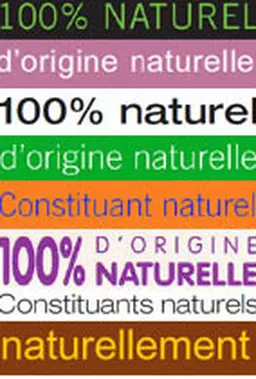
When "natural" is not... that simple!
What is a "natural" cosmetic product? What can be understood from a "natural ingredient" label? What is the difference with an ingredient of "natural ...
Sunday, January 25, 2009
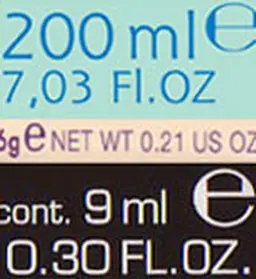
Quantity
According to the regulations governing cosmetics, the nominal quantity at the time of packaging must be indicated on the packaging, by weight or volum...
Monday, December 1, 2008
Logos on labels
They give pieces of information, clarify requirements, give clues to know more about the products, and to use them the best way. All they have a speci...
Thursday, November 6, 2008
The "Without Paraben" mention
As for the "Without preservative" wording, this mention is more and more often seen or the labels of our cosmetics. For a similar reason, we need some...
Previous page
Please enable JavaScript to continue using this application.