FR
EN
Confirm order
LOG IN
Forgot your password ?
Identification
You can also use the following identification providers
New user? Create an account
Demo
Subscribe
Briefs
News
All articles
Sector
3 questions to...
Authorities
Congresses
Jurisprudence
Publications
Agenda
Regulation
All articles
European Commission
SCCS
ECHA
France
IFRA
International
Focus
The checklists
Trends
All articles
Ecoresponsibility
Market
Tech / Digital
Consumers
Experts
The checklists
Ingredients
All articles
News
Ingredients search
Ingredients by categories
Products
All articles
Products news
Launches trends
Recalls of products
Pack
All articles
News
Ecoresponsability
Innovation
Basics
All articles
Dossiers
Advising consumers
The language of labels
Cosmetics glossary
E‑Library
Confirm order
Articles
…
Ingredients
All articles
News
Ingredients
:
News
Phytonadione epoxide: preliminary Opinion of the SCCS
In June 2026, the SCCS (Scientific Committee on Consumer Safety) accepted the European Commission’s mandate to assess the safety of phytonadione epoxide. The Scientific Committee on Consumer Safety has just published its preliminary opinion.
CLH classifications: Intention for Terpineol, proposal for Capric acid
On November 4, 2026, ECHA (the European Chemicals Agency) announced that terpineol was the subject of a harmonized classification and labeling (CLH) intention and that capric acid was the subject of a classification proposal.
Reminder - IFRA 52: entry into force of the Specification and Restriction Standards
On 12 December 2025, the IFRA (International Fragrance Association) published the 52nd amendment to its Standards. Eleven months later, on 12 November 2026, the new Standards on specifications and restrictions came into force for new creations.
California targets three new PFAS under Proposition 65
On 30 October 2026, the California Office of Environmental Health Hazard Assessment (OEHHA) published three notices of intent to list certain chemicals – PFAS – under Proposition 65. The consultation period is open until 30 November.
Alternatives to microbeads: an analysis by the RIVM
They have been banned since 2023. But in products where they were useful, they had to be replaced with something else. Are the alternatives to plastic microbeads safe for human health and the environment? That is the question the RIVM sought to answer in this analysis.
Tuesday, November 28, 2017
QRA 2: Opinion of the SCCS
The SCCS has just published its Opinion on the relevance of the model for dermal sensitisation by a fragrance ingredient quantitative risk assessment ...
Wednesday, November 22, 2017
Endocrine disruptors: an update on scientific knowledge (3/3)
At Cosmed’s 17th JEST, a day of scientific and technical exchanges held in Montpellier, France on September 29, and dedicated to critical cosmetic ing...
Monday, November 20, 2017
The European Commission has published the criteria to identify endocrine disruptors in biocides
If the process was blocked by the European Parliament for plant protection products, Regulation (EU) 2017/2100 of 4 September 2017, published in the O...
Tuesday, November 14, 2017
Canada adapts the regulation of several cosmetic ingredients
On November 8, 2017, Health Canada opened a consultation on several updates of the Cosmetic Ingredient Hotlist. In the scope: an alignment with Europe...
Tuesday, November 14, 2017
Zinc pyrithione: Request for an addendum to SCCS' Opinion
The safety of the cosmetic ingredient, preservative and anti-dandruff agent, Zinc Pyrithione, will be re-assessed by the SCCS. The request was publish...
Wednesday, November 8, 2017
Endocrine disruptors: an update on scientific knowledge (2/3)
At Cosmed’s 17th JEST, a day of scientific and technical exchanges held in Montpellier, France on September 29, and dedicated to critical cosmetic ing...
Tuesday, November 7, 2017
Hydroxypropyl p-phenylenediamine and its dihydrochloride salt: Request for Opinion to SCCS
The safety of the hair dye Hydroxypropyl p-phenylenediamine and its dihydrochloride salt (A165) will be assessed by the SCCS. The request from the Eur...
Monday, November 6, 2017
SEPPIC launches Xylishine, hair repairing and moisturizing ingredient
The SEPPIC's new active ingredient, Xylishine, is a bio-inspired (that imitates nature) association of natural sugars mainly from wood and from the br...
Monday, October 30, 2017
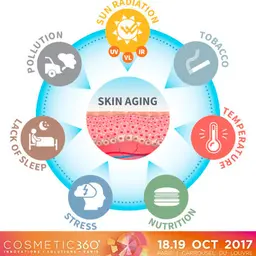
Think exposome: from its effects on the skin to the new actives to fight them
Though it is quite a recent concept, the exposome is about to revolutionize the cosmetics anti-aging approach. At least, that is what Pr. Jean Krutman...
Tuesday, October 24, 2017
Endocrine disruptors: an update on scientific knowledge (1/3)
Definitions, identification criteria, mechanisms of action, detection tests…: endocrine disruptors are at the core of many controversies that also aff...
Monday, October 16, 2017
Anses: Triclocarban could potentially act as an endocrine disruptor
As part of the Stratégie nationale sur les perturbateurs endocriniens (SNPE, National Strategy for Endocrine Disruptors), Anses (French Agency for Foo...
Monday, September 25, 2017
Cosmetic ingredients: the true from the false, according to FEBEA
Parabens, phenoxyethanol, nanoparticles of titanium dioxide, PPD, phthalates, perfume allergens… FEBEA (French Federation of Beauty Companies) has dec...
Previous page
Next page
Please enable JavaScript to continue using this application.