FR
EN
Confirm order
LOG IN
Forgot your password ?
Identification
You can also use the following identification providers
New user? Create an account
Demo
Subscribe
Briefs
News
All articles
Sector
3 questions to...
Authorities
Congresses
Jurisprudence
Publications
Agenda
Regulation
All articles
European Commission
SCCS
ECHA
France
IFRA
International
Focus
The checklists
Trends
All articles
Ecoresponsibility
Market
Tech / Digital
Consumers
Experts
The checklists
Ingredients
All articles
News
Ingredients search
Ingredients by categories
Products
All articles
Products news
Launches trends
Recalls of products
Pack
All articles
News
Ecoresponsability
Innovation
Basics
All articles
Dossiers
Advising consumers
The language of labels
Cosmetics glossary
E‑Library
Confirm order
Articles
…
Ingredients
All articles
News
Ingredients
:
News
Phytonadione epoxide: preliminary Opinion of the SCCS
In June 2026, the SCCS (Scientific Committee on Consumer Safety) accepted the European Commission’s mandate to assess the safety of phytonadione epoxide. The Scientific Committee on Consumer Safety has just published its preliminary opinion.
CLH classifications: Intention for Terpineol, proposal for Capric acid
On November 4, 2026, ECHA (the European Chemicals Agency) announced that terpineol was the subject of a harmonized classification and labeling (CLH) intention and that capric acid was the subject of a classification proposal.
Reminder - IFRA 52: entry into force of the Specification and Restriction Standards
On 12 December 2025, the IFRA (International Fragrance Association) published the 52nd amendment to its Standards. Eleven months later, on 12 November 2026, the new Standards on specifications and restrictions came into force for new creations.
California targets three new PFAS under Proposition 65
On 30 October 2026, the California Office of Environmental Health Hazard Assessment (OEHHA) published three notices of intent to list certain chemicals – PFAS – under Proposition 65. The consultation period is open until 30 November.
Alternatives to microbeads: an analysis by the RIVM
They have been banned since 2023. But in products where they were useful, they had to be replaced with something else. Are the alternatives to plastic microbeads safe for human health and the environment? That is the question the RIVM sought to answer in this analysis.
Tuesday, September 12, 2017
Phenylene Bis-Diphenyltriazine (S86): 2nd Request for Opinion to SCCS
The safety of the UV-Filter Phenylene Bis-Diphenyltriazine (S86) will be re-assessed by the SCCS. The request from the European Commission, following ...
Monday, September 11, 2017
Actibiome: the cosmetic ingredient that rebalances the microbiota
This novelty is launched by the ingredients supplier Codif. Thanks to the use of DNA analysis techniques, its laboratories have, for the first time in...
Monday, September 4, 2017
Cosmetics based on algae
If they have always covered the seashore and carpeted the seabed, today, algae also make manufacturers happy. They have been popular in the food indus...
Sunday, September 3, 2017
Procter & Gamble gets transparent about cosmetic ingredients
Procter & Gamble is embracing the cultural shift towards transparency within the beauty industry by pledging to share all its fragrance ingredient...
Wednesday, August 30, 2017
Tracking down banned substances
Under European regulations, about 1,400 substances are banned in cosmetics. Theoretically, they are prohibited in all product formulas. In practice, s...
Wednesday, August 23, 2017
HICC, Atranol, Chloroatranol: prohibited from August 23, 2019
Regulation 2017/1410 of 2 August 2017, published in Official Journal of the European Union on 3 August, amends Annexes II (prohibited substances) and ...
Wednesday, August 23, 2017
Non-nano Zinc oxide prohibited in sprays
Regulation 2017/1413 of 3 August 2017, published in Official Journal of the European Union on 4 August, amends Annex IV (colorant) of Cosmetics Regula...
Wednesday, August 23, 2017
England: the ban of plastic microbeads in cosmetics to come
On 31 July 2017, the United Kingdom notified the WTO a draft regulation aimed to ban microbeads as an ingredient in rinse-off personal care products i...
Monday, August 21, 2017
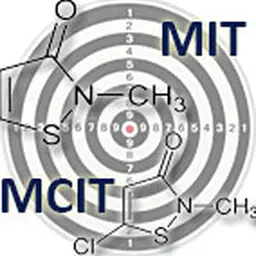
Methylisothiazolinone and Methylchloroisothiazolinone: the story of a blacklisted chemical
These preservatives, like many others, regularly draw the attention of the cosmetics media. For several years, they have been cause for worry and the ...
Sunday, August 20, 2017
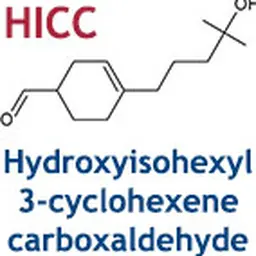
HICC: too allergenic – a fragrance too far!
We know it by various names, including Lyral®, but on cosmetics labels it is officially listed as Hydroxyisohexyl 3-cyclohexene carboxaldehyde. Deemed...
Tuesday, July 25, 2017
Tagetes extracts and oils banned and/or restricted at the end of 2017
The European Union has just transmitted to WTO a draft regulation aimed at prohibiting or restricting the use in cosmetic products of Tagetes erecta, ...
Tuesday, July 18, 2017
Sweden: the ban of plastic particles in cosmetics to come
On 6 July 2017, Sweden notified the WTO a draft regulation aimed to ban the placing on the market of rinse-off cosmetics that contain plastic particle...
Previous page
Next page
Please enable JavaScript to continue using this application.