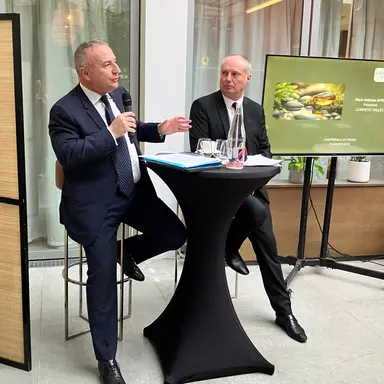
At its press conference at the start of the year (held in Paris on January 15, 2026), Cosmetic Valley took stock of the French cosmetics industry. Its president, Marc-Antoine Jamet, spoke about the sector’s vulnerabilities, its geopolitical and regulatory challenges, and the levers that need to be activated to preserve an ecosystem that remains a pillar of French foreign trade.
Marc-Antoine Jamet opened the conference with a clear reminder: cosmetics remain one of France’s major industrial assets.
France remains the world’s leading exporter of cosmetics, with a 14.1% market share, far ahead of the United States (7.9%).
But in twenty years, France has lost 6 points of export market share, representing nearly €10 billion.
The year 2025 marks a turning point. For the first time (excluding the Covid period), French cosmetics exports declined to €22.3 billion, down 1% compared to 2024.
“We still have the largest share of the global market, but that share is shrinking,” summarized the president of Cosmetic Valley.
The United States and China: two areas under pressure
The slowdown in 2025 can largely be explained by the downturn in the two main global markets.
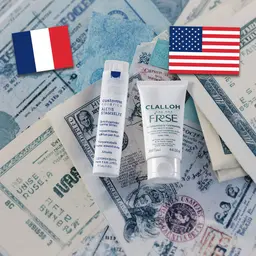
In the United States, the trade war that broke out in the spring of 2025 profoundly destabilized trade flows.
Previously exempt from customs duties, French cosmetics were hit by a combination of taxes reaching 15% on finished products, plus 50% additional duties on certain metal packaging components.
The result? French exports to the United States fell by 17% between the first ten months of 2024 and those of 2025, representing a loss of more than €500 million. According to the estimates cited, nearly 10,900 direct and indirect jobs are at risk. “Tariffs are not an abstraction: they directly affect employment, investment, and the competitiveness of our industry,” insisted Marc-Antoine Jamet.
In China, the situation is different but equally “worrying.”
After two decades of rapid growth, Chinese imports of cosmetics have contracted. French exports have remained stable at €1.5 billion, but against a backdrop of sustained slowdown in consumption and growing local competition.
“Market access is also constrained by CSAR regulations, which expose our industry to an ever-increasing risk of new tests, measures, and procedures, particularly on allergens, that go well beyond existing international practices. Involving additional costs and delays, this represents barriers to market access and obstacles to innovation,” continues Marc-Antoine Jamet.
What about Europe?
The European Union is acting as a buffer against these tensions. In 2025, French cosmetics exports to the EU grew by 4%, bucking the global trend.
But Marc-Antoine Jamet warned of another risk: that of a “European regulatory overload” that would weaken the sector’s competitiveness. “Too many standards, too many procedures, too many contradictory injunctions can produce the opposite of the desired effect,” he cautioned.
For the president of Cosmetic Valley, the priority is clear: simplify without compromising safety requirements and restore visibility to companies.
Cosmetics still insufficiently recognized as a strategic pillar
The final key point of the speech was the place of cosmetics in French industrial strategy.
Although the sector is a major contributor to the trade balance, it remains insufficiently recognized as a lever for national competitiveness, job creation, and soft power. “We may not sell Rafale fighter jets or Airbus planes, but we are involved in issues that are essential to the country’s economic future,” emphasized Marc-Antoine Jamet.
2026: the regeneration strategy in action
In response to economic, regulatory, and industrial pressures, Cosmetic Valley will roll out a roadmap in 2026 based on a central principle: regeneration.
The goal is clear: to strengthen the sector’s resilience and prepare for its long-term transformation.
In concrete terms, the cluster intends to:
• Strengthen the collective representation of the sector in France and Brussels, in conjunction with the FEBEA, with the aim of establishing a European sector committee
• Support innovation and industrial competitiveness by accelerating collaborative R&D, the industrialization of projects, and access to financing, particularly for SMEs and mid-cap companies
• Take action on skills by enhancing the attractiveness of the professions and ensuring that training programs are tailored to industrial and scientific needs
• Support the internationalization of companies