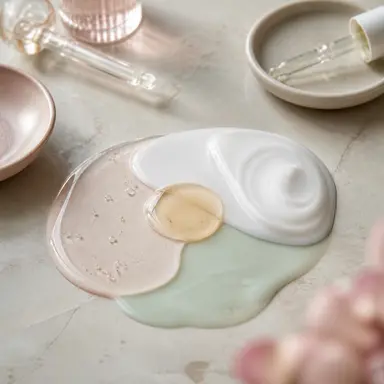
Layering, a method that involves applying skincare products in layers to maximise their effects, has become a staple in bathrooms. The practice originates in Asia, where it is constantly being reinvented, oscillating between an ever-increasing number of steps and a quest for simplicity. This analysis was presented by Florence Bernardin of Asia Cosme Lab at the Cosmed Scientific Congress (held on 29 September 2026).
To introduce her topic, Florence Bernardin wonders whether we should talk about ‘layering’ or ‘routine’. “We talk about layering, but when you look at social media, what stands out is the routine,” she observes. On TikTok, the hashtag #skincareroutine alone has around 15 million posts. However, the two concepts are not synonymous. A routine refers to the steps one follows on a daily basis. Layering refers to the products one applies in succession within those steps.
Three markets, three driving forces
Japan, Asia’s long-established beauty market, is driven by science and by mature female consumers in their forties. Its innovations are understated but disruptive.
South Korea acts as an incubator. Backed by public subsidies, it practises ‘fast cosmetics’, where products spend little time on the shelves.
China, meanwhile, is driven by health. Its young population, subjected to a gruelling pace of life, expects immediate results. “We want to experience everything, but we don’t want to change a thing. So we compensate with cosmetics and treatments.” In these last two countries, the typical beauty consumer is aged between 25 and 30 and closely follows influencers.
Everywhere, the ideal remains the same: clear, blemish-free skin that is …